
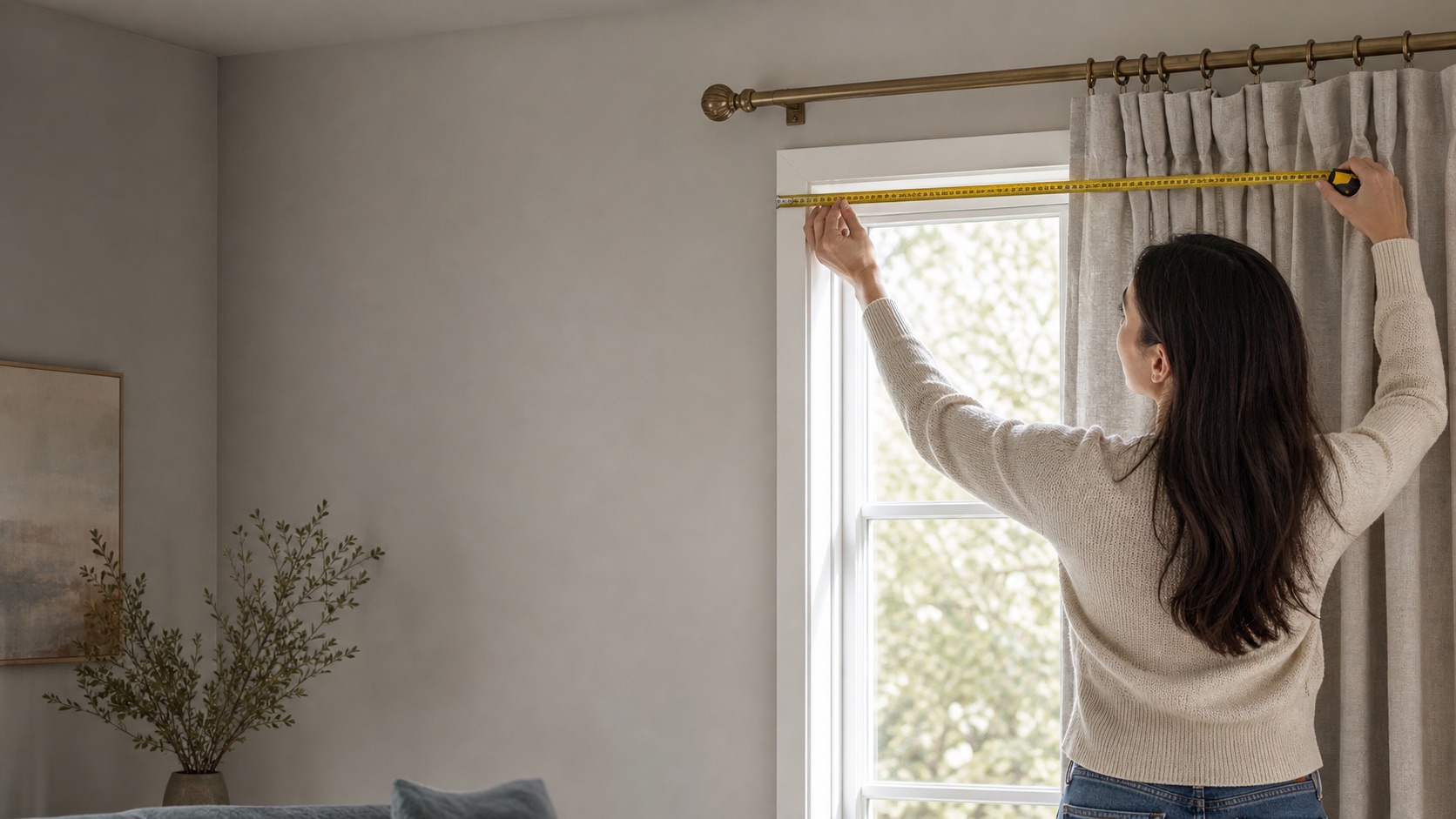
The first width question is also the one that causes the most buying mistakes: should the curtain size be based on the window width or the rod width? The answer depends on whether the hardware already exists.
Curtains hang from rods and tracks, but new hardware is usually planned from the window opening. Keeping those two situations separate prevents double-counting side extension and prevents underbuying fabric.
Use window width when you are planning new hardware
If there is no rod yet, measure the window or outside trim, then add side extension for stack-back. This planned rod span is the number that will eventually drive fabric width. The extra side space is not decoration only; it lets open curtains clear more glass and makes the window feel wider.
Use rod width when hardware is already installed
If the rod or track is in place, measure the usable span from end to end. That width already includes whatever side extension the installer chose. Adding extra stack-back again can make the curtain too full, too expensive, or visually heavy.
Do not measure finials as usable curtain space
Decorative finials can make a rod look longer than the part the rings or grommets actually use. Measure the section where the curtain can travel. If brackets interrupt the path, note whether panels can pass them.
How to enter the number in the calculator
Use window mode for new hardware and rod mode for existing hardware. If you are comparing two possible rod widths, run both versions and watch how total fabric width and panel count change.
| Situation | Best input | Why |
|---|---|---|
| No hardware | Window width plus planned side extension | You are designing the rod span. |
| Installed rod | Usable rod span | The hardware already sets coverage. |
| Installed track | Track path length | The curtain follows the track. |
| Decorative finials | Exclude finials unless fabric travels there | Finials are not coverage width. |
How this changes the calculator inputs
Use this guide before you enter numbers into the calculator. The point is to decide which width is authoritative for curtain width vs rod width: which one should you use?: the bare window, the installed rod, the track path, or the package label. Once that reference is clear, the calculator can turn it into rod length, total fabric width, and panel count without mixing measurement systems.
For a typical outside-mount window, write down the raw window width, the planned side extension on each side, the hanging point, and the floor or sill finish. If the hardware is already installed, write down the usable rod span instead of rebuilding the rod plan from the window width.
Example
A 60-inch window can become a 76-inch rod if you add 8 inches of side extension on each side. At 2x fullness, that means about 152 inches of flat fabric. If you accidentally use the 60-inch window width after the rod has already been planned, the curtain may look too thin and block more light when open.
Before you order
- Confirm whether the page or package size describes one panel or a pair.
- Keep inches and centimeters separate until the final conversion.
- Measure from the actual hanging point, not from the top of the window photo.
- Check whether brackets, finials, or corners limit how far panels can move.
The professional rule of thumb
A good curtain decision should pass three checks at the same time: it should cover the glass when closed, clear the glass when open, and finish at the floor or sill in a way that looks intentional. If one of those checks fails, the issue is usually not taste. It is usually width, fullness, hardware placement, or finished drop.
When two choices are close, choose the one that solves the harder problem. Width is usually easier to absorb because extra fabric becomes fullness. Length is harder because extra or missing fabric is visible at the floor. Hardware position is hardest to change after drilling, so confirm rod height, brackets, and side clearance before treating a package size as final.