
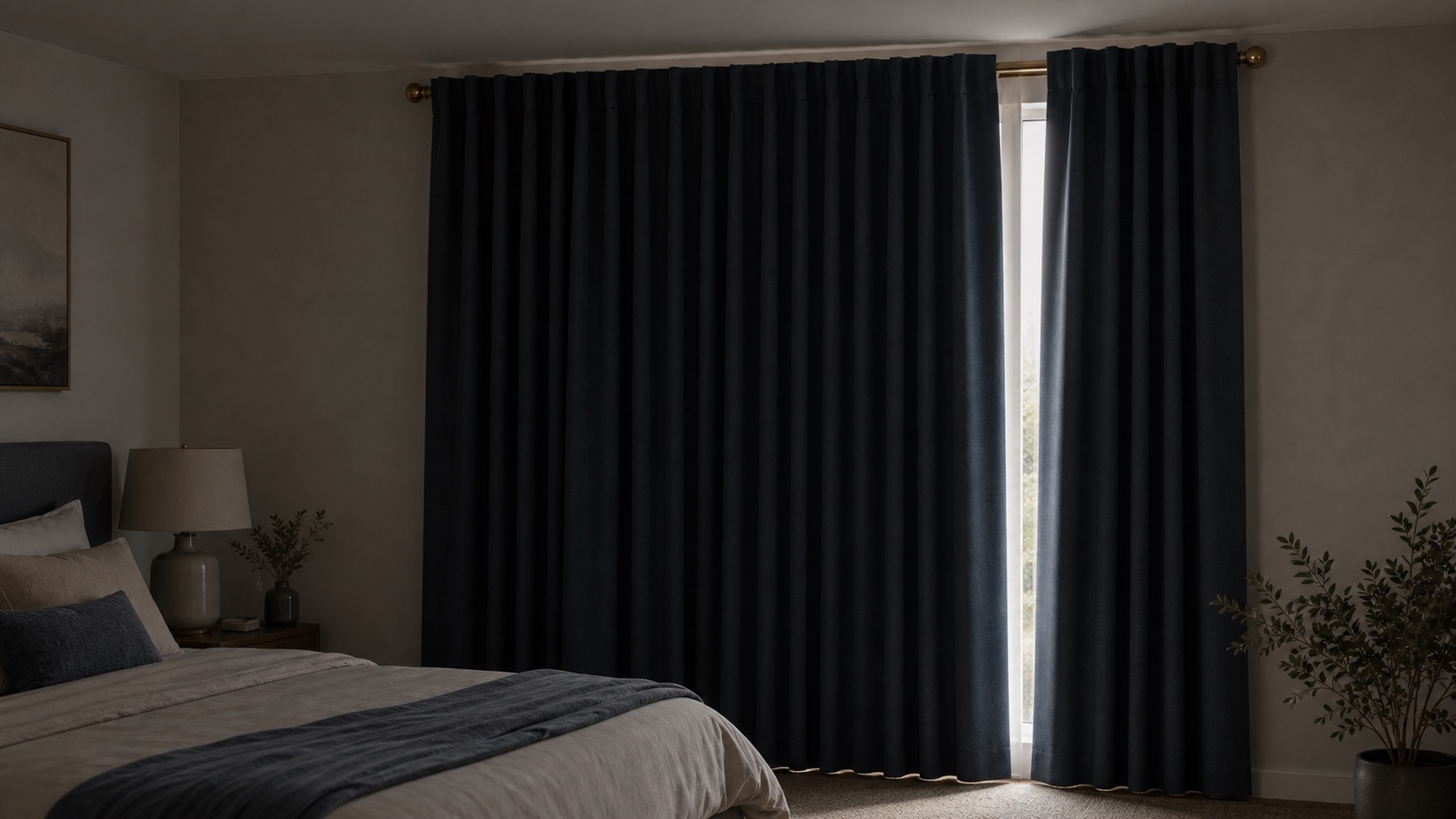
Privacy is not only about opaque fabric. People can see around curtains when the rod is too narrow, the panels are too flat, or the center closure has no overlap.
Measuring wider than the glass gives the curtain a chance to cover sightlines, not just the window surface.
Add side coverage
Outside-mounted curtains usually need to extend beyond the frame. This hides the trim edge and reduces the diagonal view into the room from outside.
Use enough fullness
Flat curtains pull tight and open gaps. Moderate fullness helps panels close with a little spare fabric instead of stretching.
Plan center overlap
If two panels meet at the center, a small amount of extra fabric helps them overlap naturally. Tracks with overlap arms can improve privacy further.
Consider the viewing angle
Ground-floor and street-facing windows need more side coverage than upper-floor windows with limited outside sightlines.
| Privacy issue | Sizing response | Why |
|---|---|---|
| Side view | Wider rod | Covers trim and wall edge |
| Center gap | More fabric or overlap | Panels meet cleanly |
| Thin fabric | More fullness or lining | Layers block view |
| Street-facing room | More generous coverage | Wider viewing angles |
How to diagnose the visible problem
For how much wider should curtains be for privacy?, start by naming the problem you can see: side gaps, thin folds, weak privacy, short-looking windows, or layers that do not move smoothly. Each symptom points to a measurement decision rather than a vague style preference.
Measure where the problem happens. Side gaps usually relate to rod width and return. Thin curtains usually relate to fullness and panel count. Poor privacy can involve viewing angle, fabric opacity, and center overlap. Short-looking windows often need a higher rod and longer panel length.
Example
If a blackout curtain glows at the side, buying the same size in a darker color will not solve the geometry. A wider rod, better side overlap, or wraparound hardware may matter more. If a sheer looks weak in daylight, increasing fullness can help more than changing to a slightly heavier fabric.
Before you order
- Confirm whether the page or package size describes one panel or a pair.
- Keep inches and centimeters separate until the final conversion.
- Measure from the actual hanging point, not from the top of the window photo.
- Check whether brackets, finials, or corners limit how far panels can move.
The professional rule of thumb
A good curtain decision should pass three checks at the same time: it should cover the glass when closed, clear the glass when open, and finish at the floor or sill in a way that looks intentional. If one of those checks fails, the issue is usually not taste. It is usually width, fullness, hardware placement, or finished drop.
When two choices are close, choose the one that solves the harder problem. Width is usually easier to absorb because extra fabric becomes fullness. Length is harder because extra or missing fabric is visible at the floor. Hardware position is hardest to change after drilling, so confirm rod height, brackets, and side clearance before treating a package size as final.