
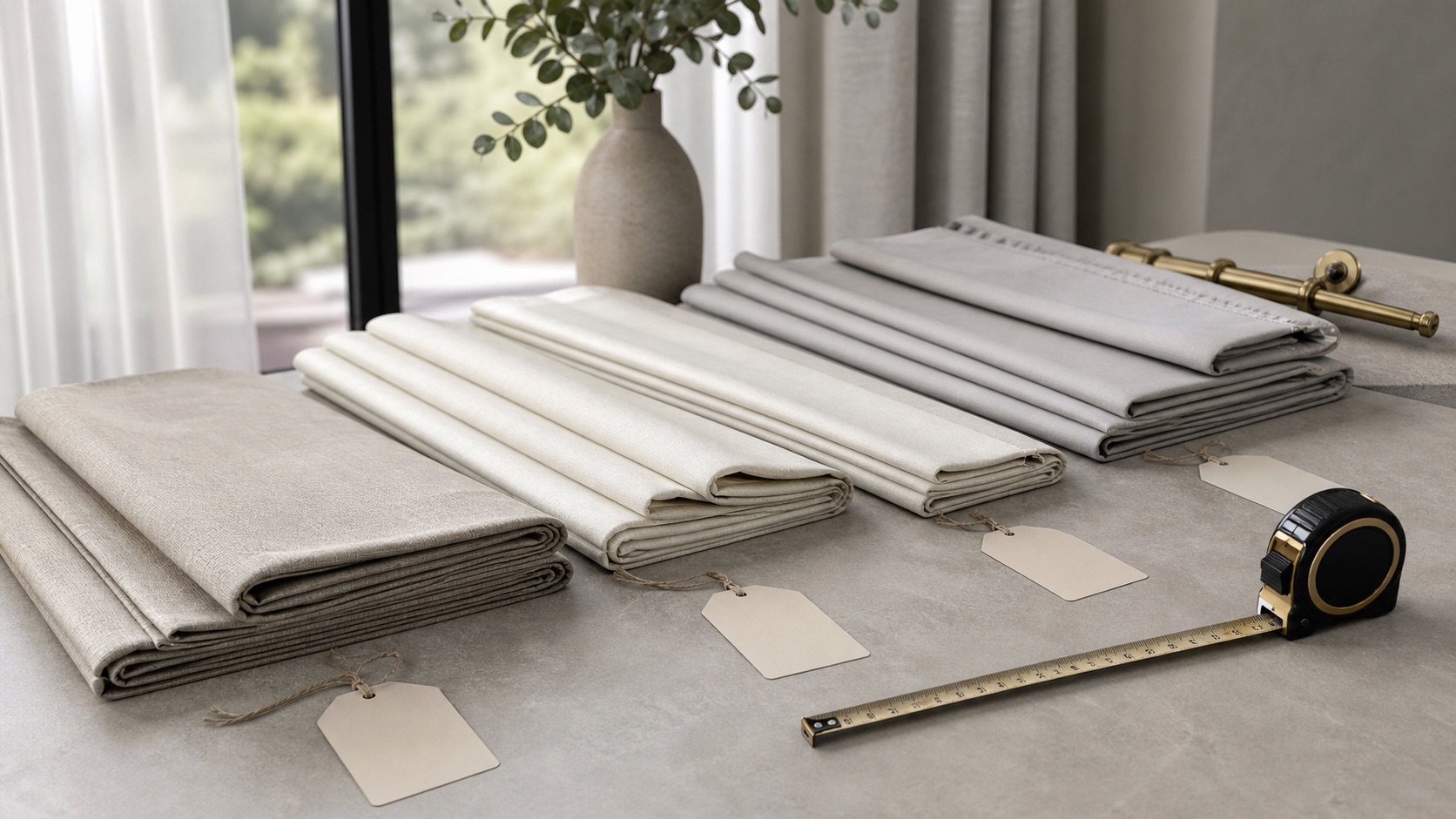
A label such as 52 x 84 looks simple, but it is one of the most common sources of wrong curtain orders. The first number is usually width. The second number is usually length.
The label describes the flat panel before hanging. It does not mean the panel will cover that same width after it is gathered on a rod.
Width comes first
A 52 x 84 curtain panel is typically 52 inches wide and 84 inches long. The width is measured flat, from side edge to side edge. The length is the finished drop of the fabric panel.
One panel or a pair changes everything
Some listings sell one 52 x 84 panel. Others sell a pair where each panel is 52 x 84. A pair gives twice the flat fabric width. Always read the package count before deciding how many units to buy.
Fullness reduces visual coverage
If two 52-inch panels give 104 inches of flat fabric and you want about 2x fullness, they are best for roughly 52 inches of rod coverage. On a 90-inch rod, the same pair would look thin.
Length still depends on hardware
An 84-inch panel might hover, kiss, or look short depending on rod height and hanging method. Rings, clips, and hooks can change where the visible fabric begins.
| Label | Flat fabric width | Panel length | Possible total width |
|---|---|---|---|
| 52 x 84 single panel | 52 in | 84 in | 52 in per unit |
| 52 x 84 pair | 52 in each | 84 in each | 104 in per package |
| 100 x 84 set | May be total or per panel | 84 in | Read listing carefully |
How this changes the calculator inputs
Use this guide before you enter numbers into the calculator. The point is to decide which width is authoritative for what does 52 x 84 mean on curtain panels?: the bare window, the installed rod, the track path, or the package label. Once that reference is clear, the calculator can turn it into rod length, total fabric width, and panel count without mixing measurement systems.
For a typical outside-mount window, write down the raw window width, the planned side extension on each side, the hanging point, and the floor or sill finish. If the hardware is already installed, write down the usable rod span instead of rebuilding the rod plan from the window width.
Example
A 60-inch window can become a 76-inch rod if you add 8 inches of side extension on each side. At 2x fullness, that means about 152 inches of flat fabric. If you accidentally use the 60-inch window width after the rod has already been planned, the curtain may look too thin and block more light when open.
Before you order
- Confirm whether the page or package size describes one panel or a pair.
- Keep inches and centimeters separate until the final conversion.
- Measure from the actual hanging point, not from the top of the window photo.
- Check whether brackets, finials, or corners limit how far panels can move.
The professional rule of thumb
A good curtain decision should pass three checks at the same time: it should cover the glass when closed, clear the glass when open, and finish at the floor or sill in a way that looks intentional. If one of those checks fails, the issue is usually not taste. It is usually width, fullness, hardware placement, or finished drop.
When two choices are close, choose the one that solves the harder problem. Width is usually easier to absorb because extra fabric becomes fullness. Length is harder because extra or missing fabric is visible at the floor. Hardware position is hardest to change after drilling, so confirm rod height, brackets, and side clearance before treating a package size as final.